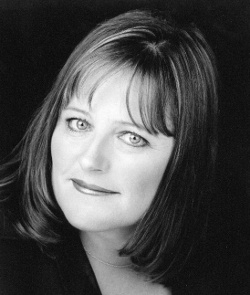
Keri Arthur is an exciting Australian author of paranormal romance and urban fantasy sure to drag you in and hold you captive until the very last page.
We asked her to take some time out of her busy schedule to answer some questions for us.
When did you know you wanted to be a writer?
I started writing when I was around twelve, but I didn’t get serious about it until after my daughter was born. I quit work to raise her, and figured I’d plenty of time to write—not realizing, of course, the total upheaval babies bring to your life.
But over the course of the next ten years, I did manage to write four books, and the fourth one was eventually published
What made you decide to pursue it as a full time career?
The decision came from the fact that after juggling split shifts (I was a cook at the Essendon Football Club) and writing contracted books, I ended up in hospital with extreme blood pressure due to stress. Something had to give and it wasn’t going to be the writing.
Of course, I was lucky—by that time I was making enough money from my writing to actually live on. Had it happened earlier in my career, the decision might have been different.
What’s your favourite thing about living in Melbourne?
The ever changing weather – it never gets boring here! And the cafe’s, the food, and shopping totally rocks.
Where is the most exciting place on the planet your writing has taken you?
The U.S. I go over there once or twice a year to attend conferences. I love San Francisco, and Disneyworld isn’t half bad either!
Which of your characters is your all time favourite?
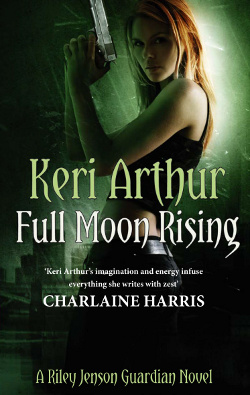
To be honest, it’s usually the characters that feature in whatever book I’m currently writing. But I’ll always have a soft spot for Riley, simply because she was my breakout character, and it was her novels that got me onto the New York Times bestseller list.
Where did the inspiration for your books come from?
I have a very weird imagination! But in Riley’s case, the plot line for the first couple of books in the series came from an article I read online on cloning.
What actually caught my attention was the fact they mentioned it might one day be possible to clone dead relatives, and my imagination just kicked off from there—not that any cloned grannies actually appear in any of the novels
How do you like to spend your downtime when you’re not writing?
I’m either walking my dogs (I have a lab and a sheltie), working in my garden, or taking pictures (I’m something of an amateur photographer).
Do you think Riley Jensen may pop up again now that you have completed the 9 books you had planned for the series?
She certainly will. She appears in the first two books of the Dark Angels series, which is an offshoot of the Riley series and features a grown up Risa. The first book, Darkness Unbound, comes out in October.
How did you come to write the genre that you do?
I grew up reading a lot of fantasy novels, but as I got older, I began to read authors like Dick Francis, Alistair MacLean, Stephen King, James Herbert and Peter O’Donnel.
I’m afraid that love for fantasy, action and horror edged its way into my writing. But it was a Mecedes Lackey novel that provided the uh-huh moment for me writing wise. She wrote an urban fantasy novel called Children of the Night, and it featured a tough heroine in a modern city environment, battling the creatures of the night. And the hero just happened to be a vampire. It crystallized exactly what it was I was trying to write.
How much do your series crossover into other series?
Quite a lot. I tend to write series rather than stand alone books, and there’s often at least a tenuous link between one series and another. It seems that after so much time spent in a world, I’m reluctant to let it go.
Speaking of crossover, Risa was a character in the Riley series who now has a series of her own. Have you planned how many books will be in that series?
There’s five books planned so far, but I’m sure it’ll be longer than that!
What made you create the worlds that you did for your writing?
The worlds are simply an extension of the characters. I don’t consciously sit down and create a world – usually, I have an idea for a story or a character, and the world develops as I write.
How many different worlds do you write in?
I’m rarely writing in more than one world at a time—I find it easier to finish one book before rolling into a different story and/or world. Having said that, I’m currently writing two books set in very different worlds.
What advice do you have for writers hoping to break into the market?
First and foremost, finish your novel, edit it, then re-edit it. Understand the market, be aware of what is going on, what is on the shelves, and what the publishers and agents are asking for. Submit and keep submitting. And if you want writing to be your career, treat it like one.
You now have over 20 books published, how hard is it to get new work contracted and into print?
There are so many more options available now for authors, and access to agent, publisher and market information so much easier to get. Which is not saying its any easier to get published, but at least the writer these days can be more informed than was possible when I first started. And publishers, no matter what state the market is in, are always on the look out for great novels. That’s how they make their money, after all.
What difficulties did you have getting your first book published?
Being an Aussie writing dark urban fantasy at a time when that genre had yet to hit it big proved very problematic. Australian publishers stated the market was dominated by American authors and they didn’t think my work was strong enough to make an impact (which may have been true, although it was strong enough to final in the George Turner Prize, a major fantasy contest at the time).
So I headed overseas, and found much the same story. I actually got my first break with a fledgling small press called ImaJinn, and ended up with 12 novels and 1 novella published with them. But I never gave up on my single title/New York dream, and kept submitting to agents. In 2005, I signed up with the Irene Goodman agency, and 5 weeks later I had a major deal. Persistence – keeping your goals in sight – is the key.
Can you tell us what has been the most rewarding moment in your career to date?
It was definitely hitting the New York Times list that very first time. It was something I’d never ever dreamed of achieving.
What does being an Australian woman mean to you?
I think Australia, more than any other country, gives women the freedom and the chance to get what they want out of life, whatever that might be. I love this country—it really is the best place on earth.

I devour books, vampires and supernatural creatures are my genre of choice but over the past couple of years, I have broadened my horizons considerably. In a nutshell – I love to write! I love interacting with a diverse range of artists to bring you interviews. Perhaps we were perfect before – I LOVE WORDS!